

STEP01 / 06
Understand
We start from the technical, commercial and application requirements behind the request — what the product has to do, where it has to do it, and on what terms.
Input · Application and dutyOutput · Stated requirement
SAM Group produces and supplies base oils, engine oils, industrial and marine lubricants, additives and coolants — and develops formulations to meet the technical and commercial requirements behind an order.
SAM Group produces base oils, lubricants and additives, and supplies them to businesses that buy on specification. Dealing with the producer means the formulation, the packaging and the supply terms are all settled in the same conversation.
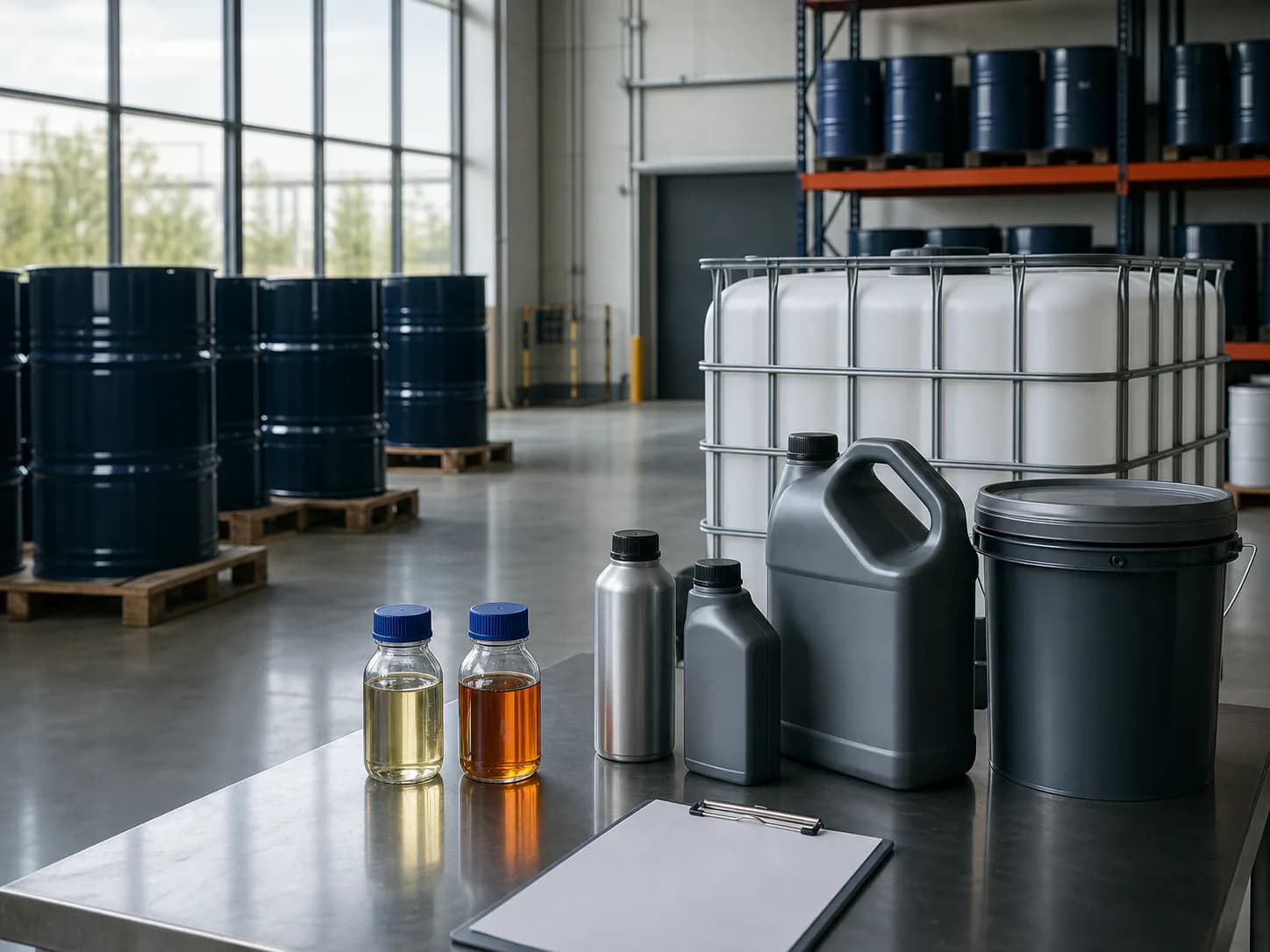
Four things that follow from dealing with the company that makes the product.
Your specification reaches the people who produce the product, without an intermediary in between.
Engine oil and base oil enquiries begin with a sample, so the product is evaluated before anything is agreed.
Where the catalogue does not answer the need, the product is developed against the requirement instead.
Bulk, flexitank, IBC and drum, selected for the volume and the route rather than offered as a fixed list.
A range built for lubricant manufacturers, industrial companies and specialised industries. Select a family to see what it covers and what an enquiry needs.
Refined base fractions supplied to lubricant manufacturers and blenders, and used as the starting point for the formulations below.
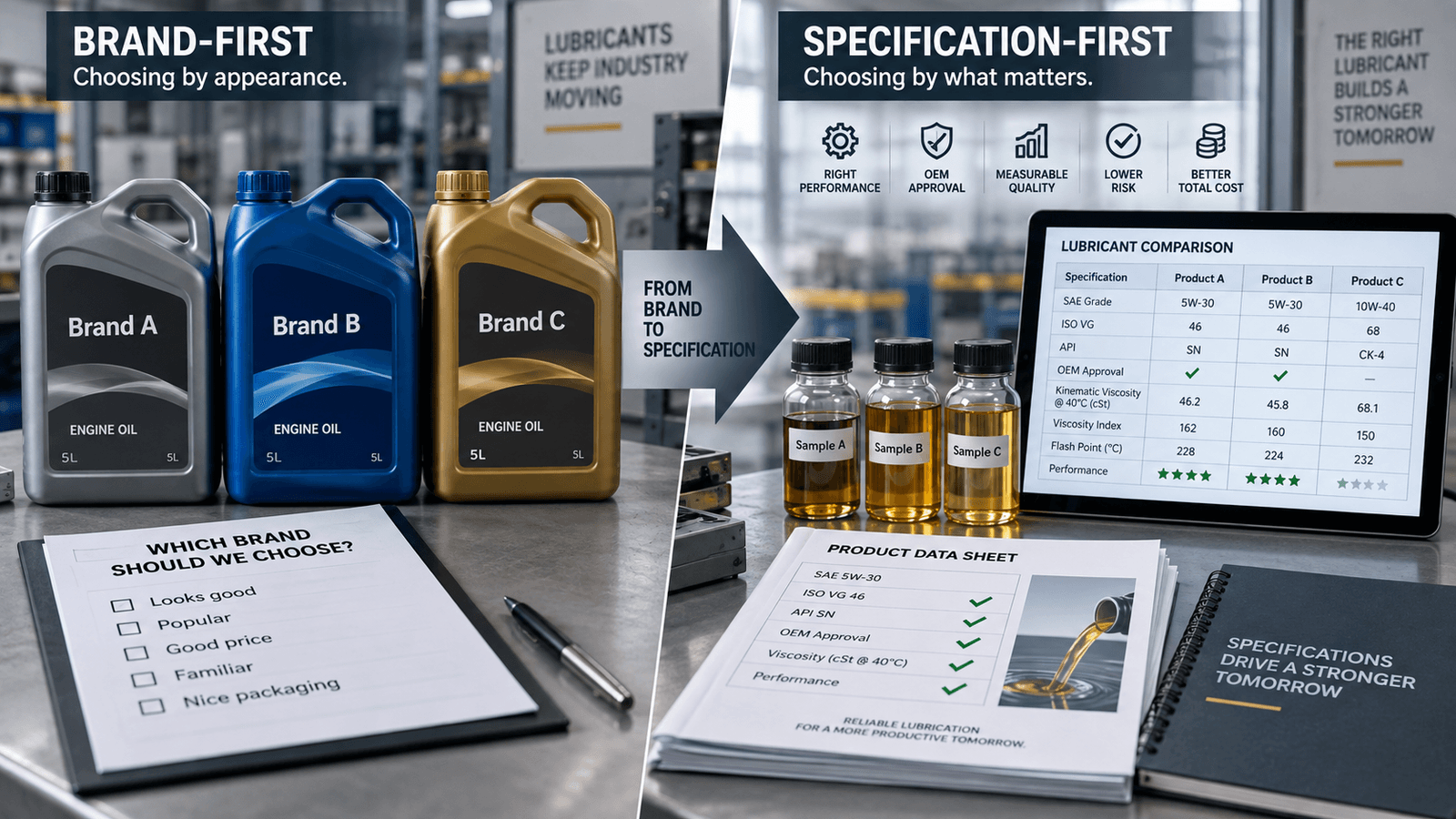
The practical differences between buying from a producer and buying from the market.
Buying from the producer keeps pricing, supply and quality in one accountable place.
Technical capability to develop a product against a customer's own requirement.
Products are tested and evaluated for performance before they are released.
Order volumes, packaging formats and delivery arrangements handled case by case.
Support with product selection and formulation development, not just order taking.
Built for repeat supply with distributors, blenders and industrial manufacturers.
The same catalogue reaches five kinds of buyer, each starting from a different question.
Engine, transmission and driveline lubricants for vehicle fleets and workshops.
Hydraulic, gear and process fluids specified against plant duty cycles.
Base oils and additive components supplied as blending inputs.
Petroleum-based products supplied into downstream processing and formulation.
Specialty grades and packaging formats for lower-volume, specific applications.
Where a standard product does not meet the requirement, the product is developed against it instead. Six steps take a stated need to a delivered order.
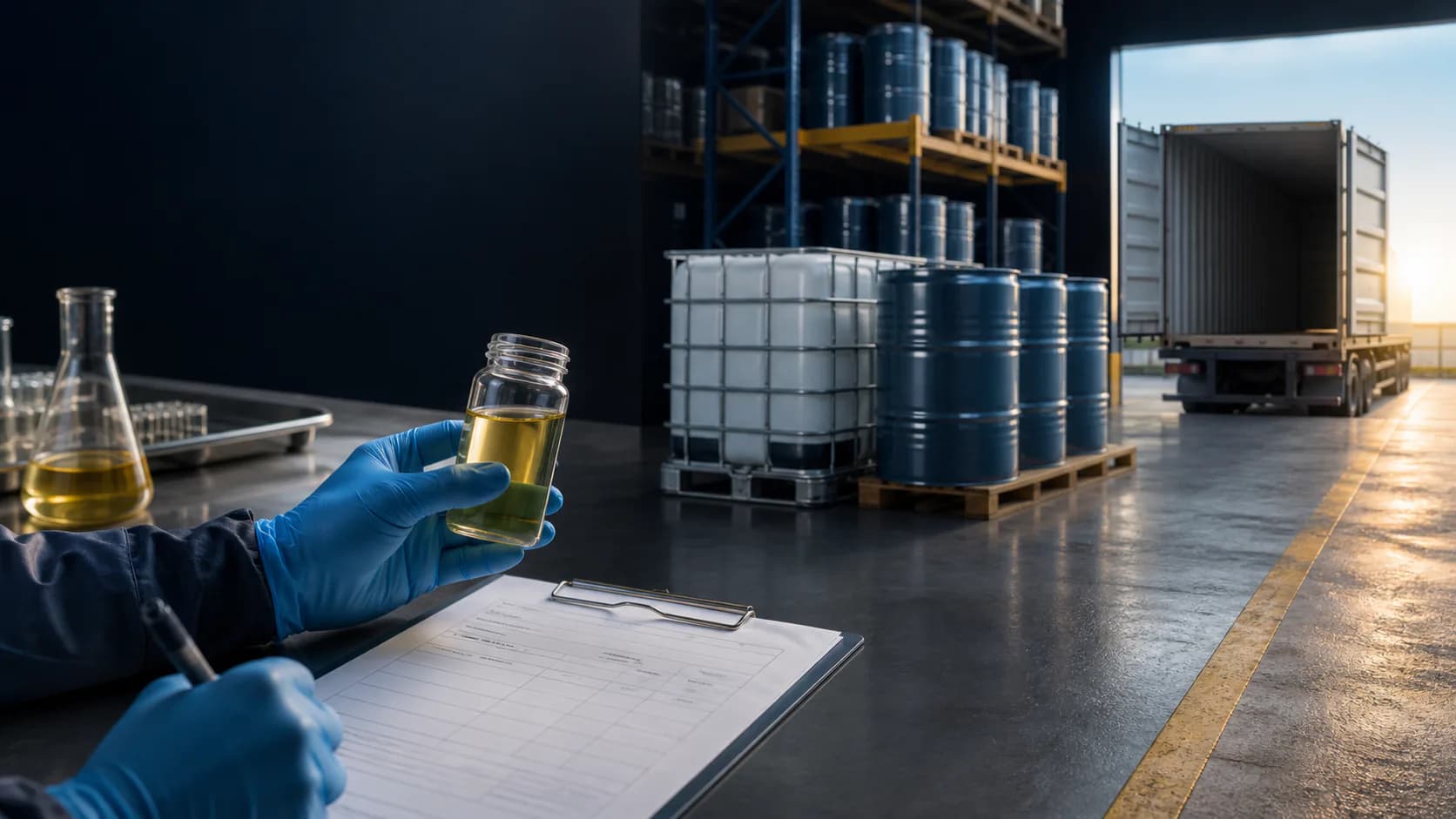
We start from the technical, commercial and application requirements behind the request — what the product has to do, where it has to do it, and on what terms.
The technical team evaluates the requirement and either adapts an existing formulation or develops a new one to meet it.
The candidate product is tested and evaluated against the specification and performance criteria the requirement set out.
Samples are reviewed and approved against the customer's own requirements before anything moves into production.
The approved product moves into controlled production, made to the formulation that was signed off rather than to a near equivalent.
The finished product is packaged and delivered on the supply and logistics terms agreed with the requirement.
Bring the grade, required quantity, packaging format, destination, and preferred trade term into the same conversation. Hover a destination to read it.
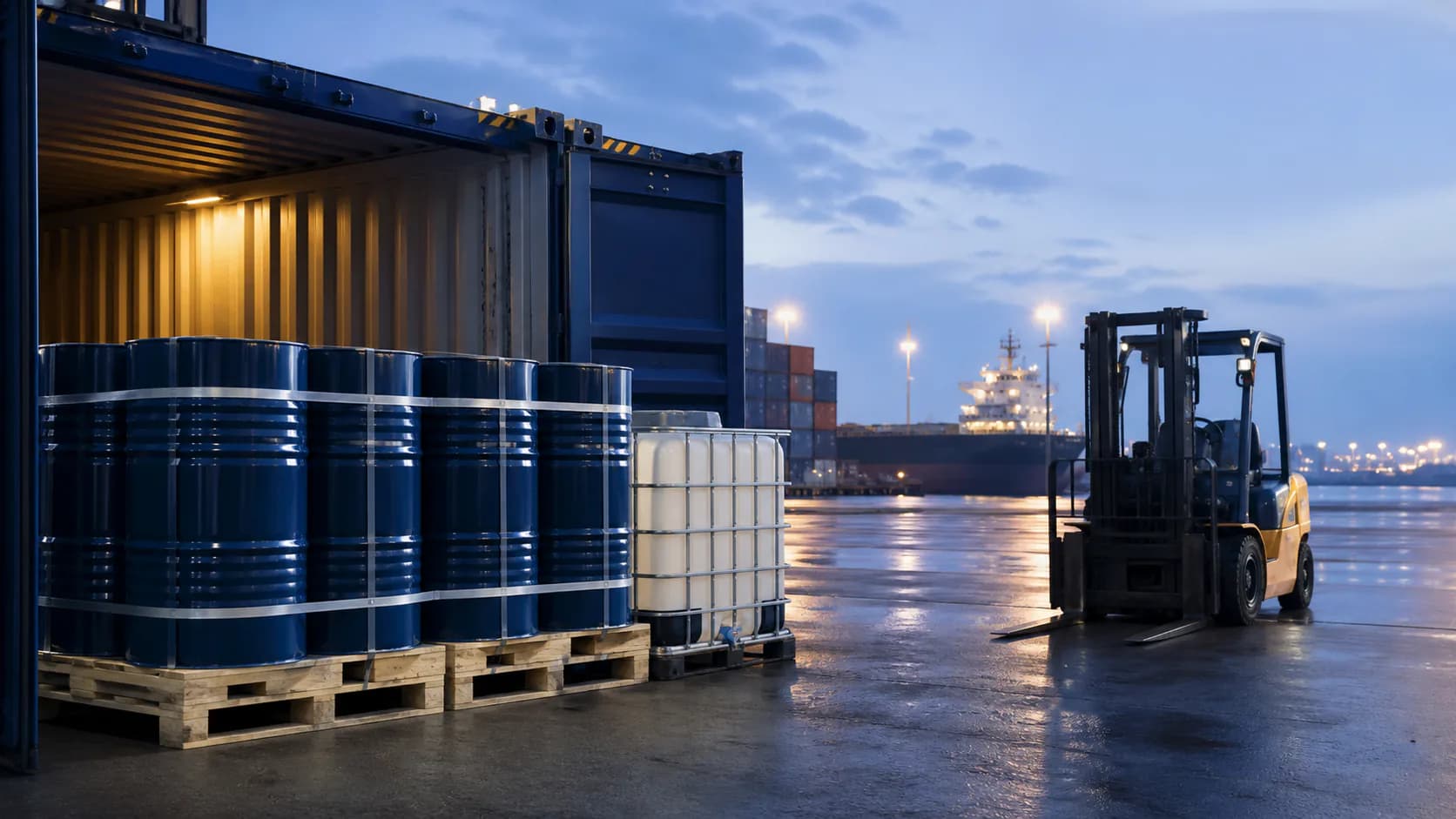
Read clear guidance on product selection, technical terminology, documentation, packaging, and export enquiry preparation.