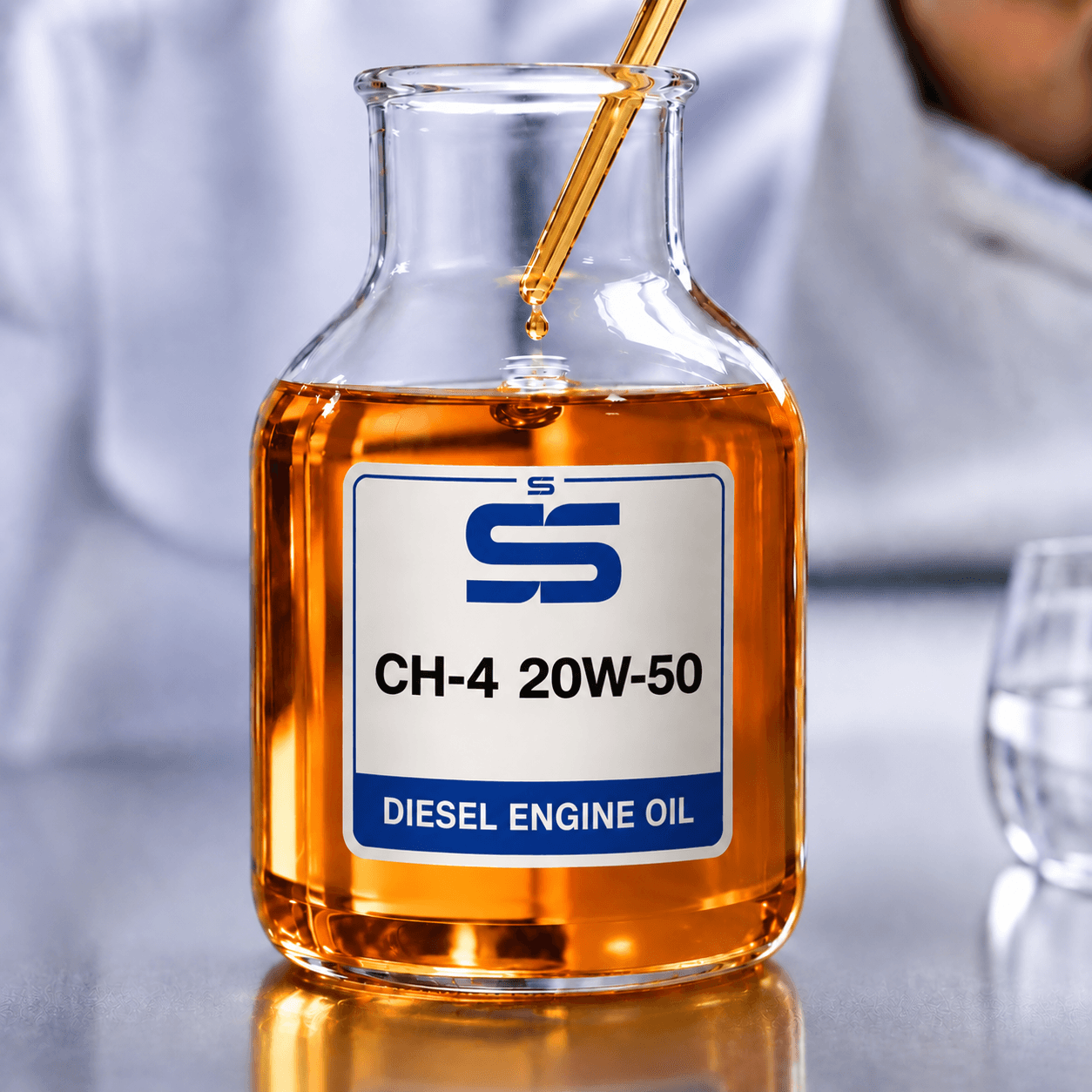
CH-4 20W-50

CH-4 20W-50 is a super heavy-duty diesel engine oil in the SAE 20W-50 viscosity grade, formulated to API CH-4. API introduced CH-4 in 1998 for high-speed four-stroke engines designed to meet 1998 emission standards.

  • Kinematic viscosity at 40 °C161cStASTM D445
  • Kinematic viscosity at 100 °C19.2cStASTM D445
  • Viscosity index134ASTM D2270
  • Total base number (TBN)11.5mg KOH/gASTM D2896

Grades & published data

Published values

Typical values from the product data sheet, each with its test method.

PropertyValueMethod
Kinematic viscosity at 40 °CcSt161ASTM D445
Kinematic viscosity at 100 °CcSt19.2ASTM D445
Viscosity index134ASTM D2270
Cold-cranking viscosity (CCS)at -15 °CcP8780ASTM D5293
Total base number (TBN)mg KOH/g11.5ASTM D2896
Pour point°C-24ASTM D97
Flash point (open cup)°C226ASTM D92
Copper strip corrosionat 100 °C1aASTM D130
Foaming, Sequence I (24 °C)ml/ml5/0ASTM D892
Foaming, Sequence II (93.5 °C)ml/ml10/0ASTM D892
Foaming, Sequence III (24 °C after 93.5 °C)ml/ml5/0ASTM D892
Kinematic viscosity at 100 °C after shear (30 cycles)After shear, 30 cycles (ASTM D6278)cSt17.6ASTM D445
Noack volatility%wt7.5ASTM D5800
Specific gravity0.892ASTM D4052
Viscosity loss after shear%10.5ASTM D6278

Overview

CH-4 20W-50 is a super heavy-duty diesel engine oil in the SAE 20W-50 viscosity grade, formulated to API CH-4. API introduced CH-4 in 1998 for high-speed four-stroke engines designed to meet 1998 emission standards.

The specification table publishes typical values from the product data sheet, each with its ASTM method: kinematic viscosity at 40 °C and 100 °C, cold-cranking viscosity, base number, Noack volatility and foaming tendency, plus viscosity after shear and copper corrosion. Check those values and the API category against the engine manufacturer's requirement before ordering.

Application

High-speed four-stroke diesel engines

Engines whose manuals specify API CH-4 or an earlier API diesel category.

Application

Operating climate suited to SAE 20W-50

Cold-start performance is rated at -15 °C under SAE J300; choose this grade where ambient temperatures and the manufacturer's viscosity chart allow 20W-50.

Feature

Inside the SAE J300 limits for 20W-50

Kinematic viscosity at 100 °C is 19.2 cSt, within the SAE J300 band for grade 50 (16.3 to below 21.9 cSt). Cold-cranking viscosity is 8,780 cP at -15 °C, under the 9,500 cP maximum that SAE J300 sets for 20W.

Feature

Base number 11.5 mg KOH/g

The total base number (TBN, ASTM D2896) of 11.5 mg KOH/g is the oil's alkaline reserve for neutralising acidic combustion by-products between drains.

Feature

Viscosity index 134, Noack 7.5 %wt

A viscosity index of 134 (ASTM D2270), Noack evaporation loss of 7.5 %wt (ASTM D5800) and a pour point of -24 °C (ASTM D97) are published as typical values.

Questions

Which CH-4 viscosity grade should I choose?

We list CH-4 in more than one SAE grade. Lower winter numbers are rated for colder starts under SAE J300 (10W at −25 °C, 15W at −20 °C, 20W at −15 °C); follow the viscosity chart in the engine manual for your climate.

Documents & supply

  • TDSTechnical Data SheetProperties, test methods and guidanceRequest
  • SDSSafety Data SheetHazards, handling, storage and transportRequest
  • COACertificate of AnalysisIssued per batch, with its test resultsRequest
  • Bulk
  • Flexitank
  • Drums
  • IBC
  • Pails & retail packs
  • EXW · FOB · CFR · CIF
Export & Logistics

Next step

Can't find exactly what you need?

The range above is what we publish. Formulation to a customer brief is a route of its own, and a sample is the first stage of it.

Request a custom solution